
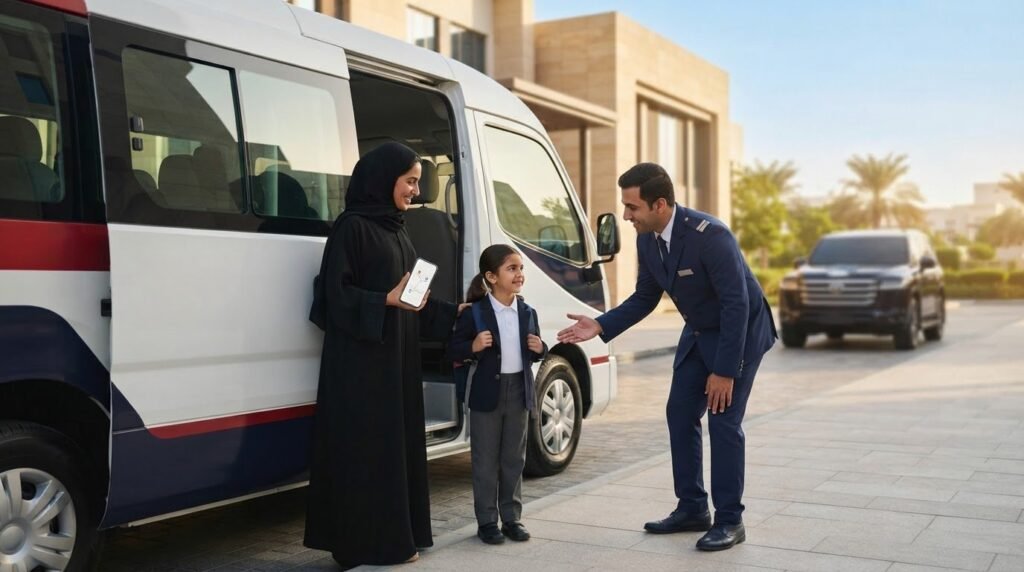
Real-time tracking is a separate feature, not something a vehicle’s size can tell you. In the UAE, standard school buses are described as carrying 25-40 children per bus, while premium school transport vehicles carry 4-12 children per vehicle. Private school transport should be matched to the group, route and level of journey updates families need.
It’s understandable to want reassurance about where a child is during the school run. Vehicle choice matters too: a nursery group, a school cohort and a university group can have different needs for space, comfort and daily coordination.
This guide explains how to assess tracking and communication options, compare vehicle sizes, and choose comfort features for different kinds of groups. Families arranging their own journeys can also compare available car categories and SUV rental options. The guide covers practical factors that help schools and families make an informed choice.
- Match vehicle capacity to the number of passengers and the journey, rather than choosing by size alone.
- Compare seating comfort and air-conditioning needs with the length and timing of the school run.
- Plan pickup and drop-off arrangements around the route, school timings and safe handover points.
- For families arranging their own journeys, Al Madina Car Rental offers economy, luxury, Nissan and SUV rentals.
Vehicle options for different group sizes
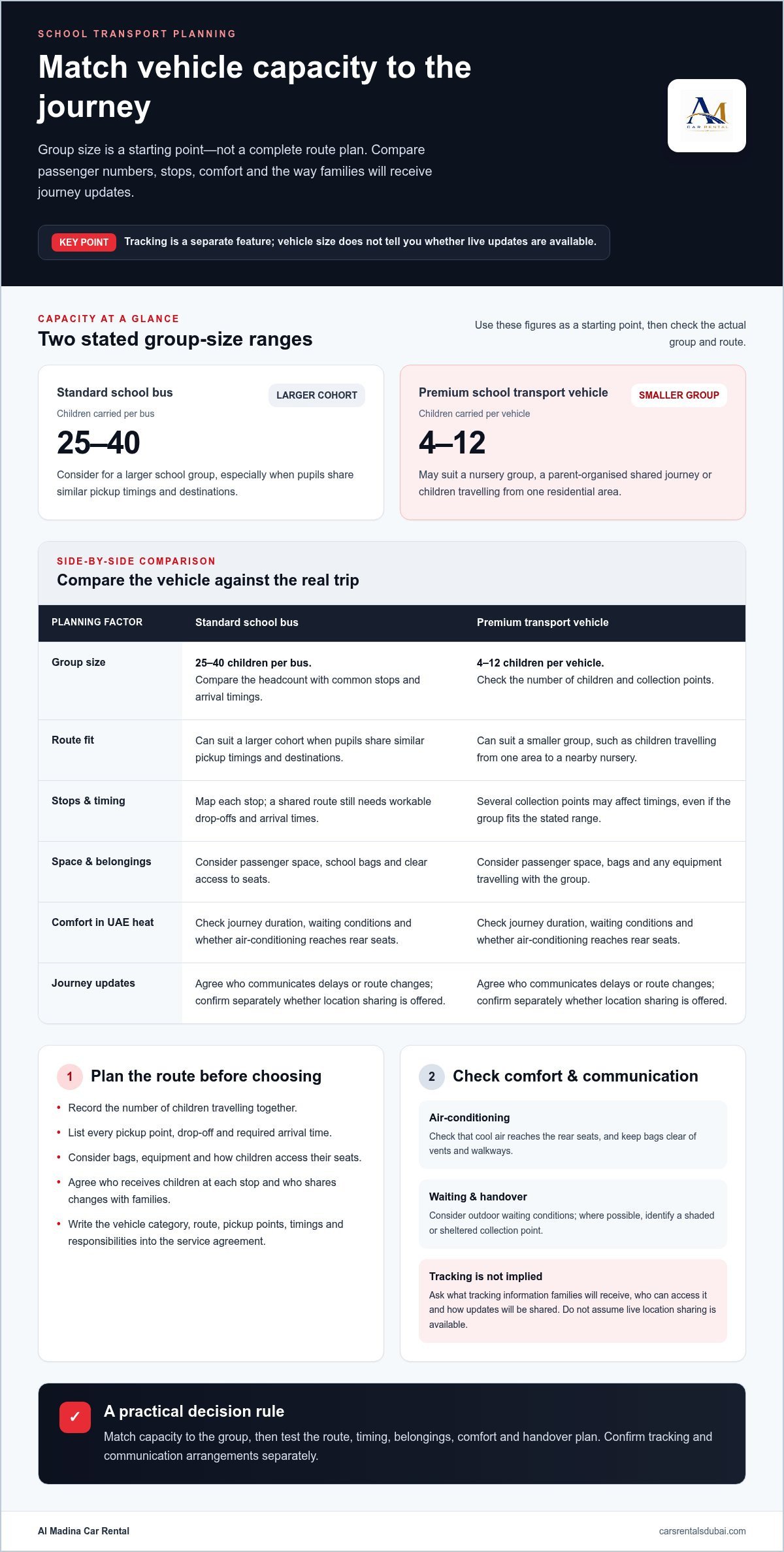
Start with the number of children travelling together, then match vehicle capacity to the route. Standard school buses are described as carrying 25-40 children per bus, while premium school transport vehicles carry 4-12 children per vehicle. These ranges offer a useful starting point for comparing a full-school route with a smaller nursery group or parent-organised journey.
For a larger school cohort, a standard bus may suit a route where pupils share similar pickup timings and destinations. The practical question is whether the whole group travels together or needs separate stops. For example, pupils from one campus who live across several neighbourhoods may need a route plan that accounts for each drop-off, not just the total headcount.
A premium vehicle carrying 4-12 children can be a better fit for a smaller group, such as children travelling from one residential area to a nearby nursery. It can also suit a parent group coordinating a shared journey. Compare the passenger count with the pickup sequence: several separate collection points may affect timings even when the group fits comfortably.
Choose capacity around the people and belongings on board. A group of younger children may need room for school bags and clear access to seats. A university group may have different needs, such as space for study materials. These examples don’t establish a vehicle specification; they show why passenger count alone doesn’t describe the journey.
- One school cohort: Compare the group size with the 25-40 children per bus range, then map common stops.
- A nursery or parent group: Consider whether a 4-12-child vehicle suits the group and its collection points.
- Several destinations: List each stop and required arrival time before deciding whether one shared route is practical.
When a group falls between the stated capacity ranges, don’t assume that squeezing everyone into one vehicle is the answer. First separate fixed requirements from preferences. Record the number of children, pickup locations, school arrival timings, and any equipment or bags travelling with them. Then compare options that keep the route workable without overlooking passenger space.
Responsibility matters alongside size. Agree who receives children at each stop, who communicates delays, and whether an accompanying adult is needed for the group. If an adult is assigned, make their role clear and ensure they are prepared for the responsibilities agreed with the school or family. Defined handovers can support peace of mind without treating the vehicle itself as a supervision plan.
Put the operational details in a written contract or service agreement. It should make the chosen vehicle category, route, pickup points, timings, and responsibilities easy to understand. If a document includes a “rights reserved” footer, distinguish that wording from the practical transport terms. Families and school administrators can then compare like with like instead of relying on a vehicle label alone.
Finally, consider how the arrangement handles changes in attendance. A parent group may have occasional absences, while a school route usually follows a set timetable. Write down how group numbers are communicated and how pickup changes are passed to the responsible adult. These steps help match vehicles to real journeys, not just a headcount collected once.
Comfort and air-conditioning
In the UAE, heat makes cabin comfort a practical part of planning a school journey. For a Dubai pickup, consider how long children may wait before boarding, how long they’ll travel, and whether the vehicle’s air-conditioning is working effectively. A comfortable cabin depends on more than setting a cool temperature. Clear boarding arrangements and suitable journey timings also shape the experience.
Before choosing an arrangement, list the journey’s conditions. Note the pickup location, whether the vehicle waits outdoors, and where it will drop off children. A nursery near an exposed parking area has different boarding conditions from a school with sheltered access. This short review helps families and administrators identify comfort priorities before agreeing on a route.
Ask for a practical demonstration of the air-conditioning before a regular service begins. Check whether cool air reaches the rear seating area, not only the front. Make sure passengers can sit comfortably without blocking vents with bags. For a monthly arrangement, include cabin comfort in routine discussions, alongside route timings and collection points.
- At collection: Identify a shaded or sheltered waiting point where the location allows it.
- During boarding: Keep bags clear of air vents and walkways.
- At drop-off: Agree where children leave the vehicle and who receives them.
Route design affects comfort, too. Several collection stops can extend the time children spend inside, even when the school is nearby. For example, a parent group travelling from different streets can compare a central meeting point with separate pickups. The choice depends on walking distance, safe access, and the group’s timings. It shouldn’t rest on convenience for the driver alone.
Communication matters when a route changes. Agree who informs families about a delayed pickup, a changed location, or an adjusted drop-off point. A trusted school contact or parent organiser can share the same update with everyone. Keep the message specific: name the new meeting point and the expected change, rather than sending a general note that leaves families uncertain.
Tracking and GPS tracking are separate from air-conditioning and cabin comfort. Don’t assume a vehicle has live location sharing because it has onboard equipment. Before a journey plan begins, agree what tracking information families will receive, who can access it, and how updates are communicated. For example, a school may use a designated contact to relay a vehicle’s location. The process should be clear to parents and staff.
Comfort also includes the way passengers use the cabin. For younger children, consider whether they can board and leave without crowding. For older students, think about bags, personal space, and a calm ride. A university group travelling to campus may prefer different arrangements from a nursery class heading to a nearby activity. Make the passenger group part of the decision.
Use a written checklist before confirming recurring transport. Record the pickup location, drop-off point, planned timings, communication contact, and agreed approach to air-conditioning. Add the process for reporting a cabin issue, such as cooling that doesn’t reach the rear seats. A clear record makes it easier for families, schools, and the transport organiser to discuss the same details.
For summer journeys in Dubai, review the plan when the route or collection point changes. A new outdoor waiting area may alter how long children stand in the heat before boarding. Choose a practical meeting point, communicate it clearly, and make sure the person collecting children knows the handover arrangement. These steps bring comfort, coordination, and family expectations into one plan.
School pick
Choose a school transport arrangement by comparing the route, vehicle class, group size and required school timings. For families in Dubai, the choice also depends on pickup locations and where children can be handed over. Start with the school’s daily schedule, then map each collection and drop-off point. This shows whether a shared route fits the family’s routine.
Cost is one factor in the comparison. It depends on route distance, vehicle class, group size and school timing requirements. Compare these factors together: a longer route or a different vehicle class can affect the arrangement, while a shared group can change how costs are considered.
Before comparing options, write down the practical details for each child. Include the home location, school entrance, required arrival time, and who will receive the child at drop-off. For example, a family with children attending different Dubai campuses should assess each journey separately. A single route may not suit both schedules, even if the schools are in the same area.
School timings can shape the day as much as distance. Compare the school’s start and finish times with the expected journey window, then consider how the timing fits the family’s morning and afternoon routine. A pickup plan that suits one child may not work for a sibling attending another campus.
Pickup and handover arrangements need the same attention as the route. Identify the campus entrance and agree where the adult handover takes place. For example, a parent bringing a child by car should know the designated drop-off point rather than improvising at the roadside. A clear location helps families coordinate arrivals.
Compare the available arrangements using the same checklist. That keeps attention on the details affecting each child, rather than choosing on price or vehicle class alone. Ask the school or organiser to explain the route plan, including how changes to timings or collection points are communicated. Record the agreed details so parents and school staff share the same expectations.
- Route: List every pickup and drop-off location, then compare the journey with school timings.
- Cost: Consider route distance, vehicle class, group size and timing needs together.
- Handover: Agree the exact campus entrance or meeting point before the first journey.
- Daily routine: Consider how the journey window fits family schedules, especially when children attend different campuses.
Finally, review the arrangement from a child’s point of view. A workable plan needs a clear pickup point, a predictable handover, and timings the family can manage. If a family’s Dubai address or school schedule changes, revisit the route details and update the relevant contacts. These steps help parents make a more informed school transport choice.
A well-planned journey should also feel manageable for the child, not only workable for the adults arranging it. Consider whether the pickup point is easy to reach, whether the child can identify the agreed handover place, and whether the expected journey window leaves room for the school day and family routine. Use those factors together when weighing the arrangement, and confirm what is included rather than judging the option by cost alone. If the route or schedule changes, ask how the family will be informed and who should be contacted with questions. A shared understanding can make daily preparation more predictable for children and caregivers.
Star Private School in Sharjah says bus journeys normally require more than one hour before and after school timings for pickups and drop-offs. Families considering that arrangement can compare the full journey window with their child’s routine and decide whether it is suitable. Star Private School asks parents to drop own-transport students inside the school campus rather than on the road. Confirm the campus handover point in advance and make sure the child knows where the receiving adult will be. These details matter whether the child uses a bus or travels with family: the route, timing and handover should be clear to everyone involved. Before settling on an option, check that the agreed plan remains practical for the child on ordinary school days and that the family knows how to coordinate any necessary adjustment.
Al Madina Car Rental: Economy Car Rentals
AL MADINA CAR RENTAL offers a practical option for families who arrange their own school journeys and need a rental car rather than shared group transport. Economy Car Rentals can suit everyday trips between home, school and activities. Families comparing vehicle categories can also consider Luxury Car Rentals, Nissan Car Rentals and SUV Rentals.
A rental car may work well when a parent or guardian is responsible for the journey, particularly if school timings or pickup locations differ from a shared route. It isn’t a substitute for group transport when a school needs to move many students together. Consider the passengers, route and family’s daily plans before choosing a vehicle category.
For a family-arranged school journey, contact AL MADINA CAR RENTAL or visit carsrentalsdubai.com to explore the available options.
Plan the journey that fits your family
Your next step is to turn the route into a clear, manageable plan. Decide who will travel with the children, which locations the journey needs to connect, and whether a family-arranged car journey suits your routine better than shared transport. A practical plan makes it easier to discuss timings and handovers with the school.
For families arranging their own journeys, Al Madina Car Rental offers Economy Car Rentals, Luxury Car Rentals and Nissan Car Rentals. These options serve a different purpose from group transport, so choose according to your family’s travel needs. A rental car may suit a parent managing school runs and other daily trips, while a school or nursery moving a group needs an arrangement designed around that group.
Keep your private school transport plan grounded in the journeys you actually make. Review it when your family’s routine or school arrangements change, and keep the agreed pickup and handover details accessible to everyone involved.
For help choosing a rental option for your family’s journeys, contact Al Madina Car Rental. A clear plan is a useful starting point for a smoother school routine.
Frequently Asked Questions
How do I evaluate a school transport provider before committing?
Compare the written service terms, not just the vehicle description. Ask for the planned route, pickup window, handover procedure, and the contact process for delays or missed collections. Check how changes, complaints, cancellations, and emergency situations are handled, then make sure the answers appear clearly in the agreement. For private school transport, review the arrangements against your child’s actual school schedule and your family’s daily routine.
Is private school transport safer than the school bus?
Not automatically; safety depends on the specific vehicle, journey arrangements, supervision, and handover process. Compare how each option manages boarding, passenger behaviour, route updates, and the transfer of responsibility at school and home. For example, a smaller vehicle may suit a family’s schedule, while a school bus may be organised for a larger group. Choose the arrangement whose safeguards and daily procedures fit your child’s needs.


