
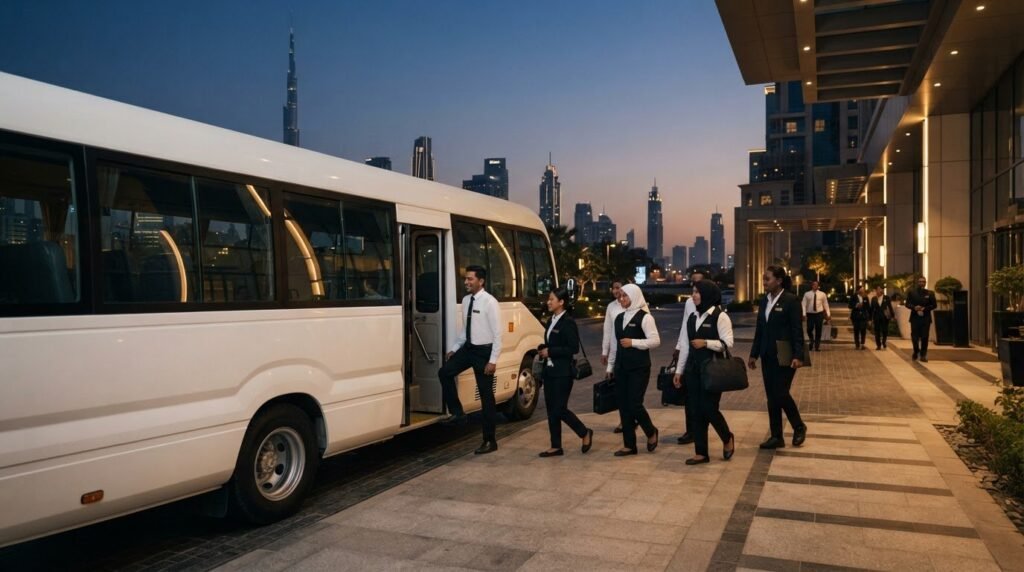
The cost of a hotel staff shuttle bus service in Dubai depends on the route and shift plan, not just the vehicle. Hotels typically organise transport around where staff live, how many employees need rides, and the timing and frequency of pickups and drop-offs. Day and night shifts call for schedules that reflect changing travel times.
It’s reasonable to want a clear cost before planning staff transport. To assess the arrangement, consider the full routine: staff accommodation, hotel location, routes, passenger numbers and shift changes all shape the plan.
This guide explains the main factors that affect transport costs and how to organise shift-based journeys. It also covers what to consider when assessing vehicle capacity, routes and schedules for a hotel in Dubai.
Key Takeaways
- Estimate transport costs by mapping staff accommodation, hotel locations, passenger numbers and shift timings, rather than considering vehicle size alone.
- Plan pickups and drop-offs around each shift change, with fixed routes linking accommodation and the hotel.
- Match vehicle capacity to team size: options used for staff transport include 14-seat vans, 30-seat Toyota Coasters and 32-seat Mitsubishi Rosa vehicles.
- Review how route frequency and overlapping shift times affect the daily transport schedule.
- Consider how Dubai’s around-the-clock hotel operations shape the pickup plan for day and night staff.
Q1.How much does hotel staff transportation cost in Dubai?
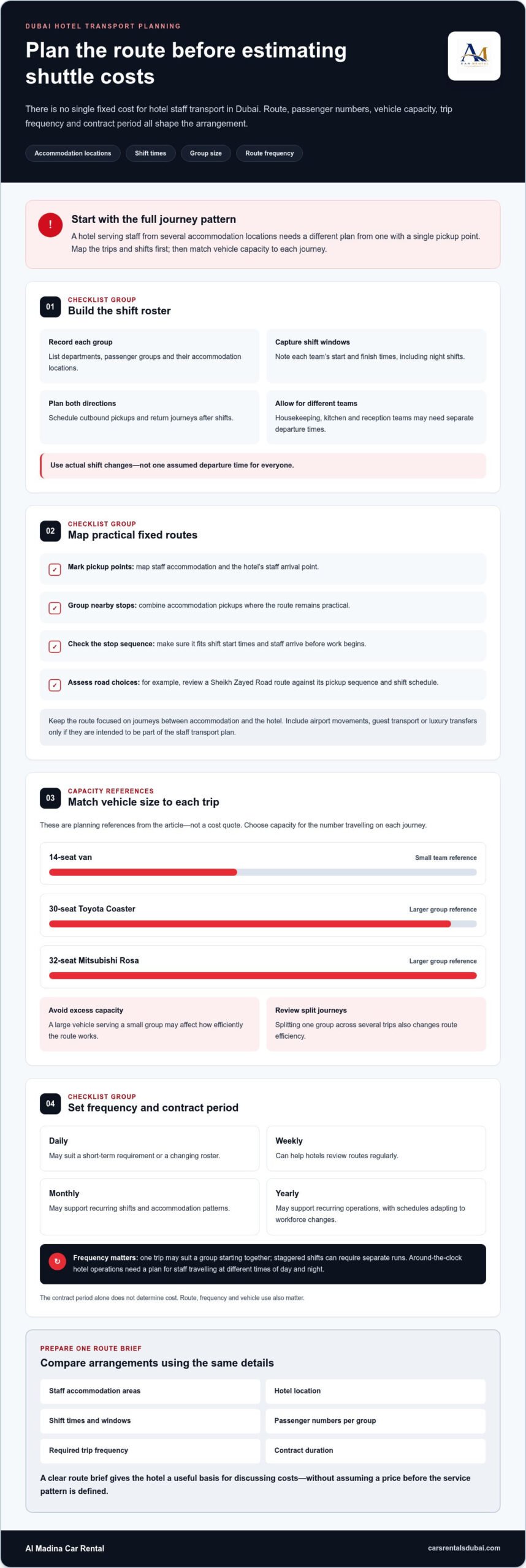
There’s no single fixed cost for hotel staff transportation in Dubai. The amount depends on the route, passenger numbers, vehicle capacity, trip frequency and contract period. A hotel serving staff from several accommodation locations needs a different plan from one with a single pickup point. To assess the requirement, map the journeys and shifts, then match vehicle capacity to each trip.
Start with the daily movement pattern. List each shift’s start and finish times, the number of employees travelling and their accommodation areas. Plan pickups between those locations and the hotel, with return journeys after shifts. Early kitchen staff, housekeeping teams and late-finishing reception staff may need separate departure times. A practical schedule reflects actual shift changes rather than assigning one departure time to everyone.
Vehicle size affects how routes can be planned. A 14-seat van can suit a small team, while a 30-seat Toyota Coaster or a 32-seat Mitsubishi Rosa can carry larger groups. These capacities are useful planning references, not a cost quote. The vehicle must fit the number travelling on each trip. Sending a large vehicle for a small group, or splitting one group across several trips, changes how efficiently the route works.
How contract length affects the estimate
Contract periods can be organised around different operational needs. A daily arrangement may suit a short-term requirement or a changing roster, while weekly planning can help hotels review routes regularly. Monthly or yearly planning may support recurring shifts and accommodation patterns, while schedules can still adapt to workforce changes. The period alone doesn’t determine cost: route, frequency and vehicle use also matter.
Ask for the cost structure to reflect the actual service pattern. Set out the pickup locations, hotel destination, shift windows, passenger count and return-trip requirements. Then distinguish regular journeys from occasional changes. If staff numbers rise for a particular shift, that can affect capacity or require a different route. Clear inputs make it easier to compare daily, weekly, monthly and yearly arrangements on the same basis.
Reviewing routes already in use
Before adding vehicles, review whether existing hotel transport routes can be improved. Map each accommodation pickup and the hotel destination, then identify overlapping stops. Grouping nearby pickup points may avoid unnecessary detours. Check the stop sequence against shift start times so employees arrive before work begins. If a route serves separate groups, consider whether a larger vehicle or adjusted frequency would suit the plan better.
Route frequency matters as much as vehicle capacity. One trip may suit a group starting together, while staggered shifts can require separate runs. A hotel operating around the clock needs a plan for staff travelling at different times of day and night. Don’t assume airport movements, guest transport or luxury transfers are part of a staff route. Include them only if they are intended to be part of the transport plan.
For teams travelling across Dubai, location and road choices shape journey planning. A route using Sheikh Zayed Road, for example, should be assessed against its pickup sequence and shift schedule. Keep the focus on practical journeys between accommodation and the hotel, without adding stops that delay the group. Staff transport beyond Dubai involves different distances and locations, so assess those journeys separately rather than treating them as a single Dubai route.
Before comparing transport arrangements, prepare one route brief with the same details for each option. Include staff accommodation areas, hotel location, shift times, group sizes, required frequency and contract duration. This helps identify what drives the plan. For a hotel staff shuttle bus service in Dubai, these details provide a useful basis for discussing costs instead of relying on a generic rate.
Grouping stops by accommodation area helps define the route, while shift times determine the schedule. Staff transport schedules should reflect accommodation locations and shifts, with journeys following fixed routes. Set out the locations and shifts the plan must cover, then check that the routes match. This gives the hotel a clear basis for discussing its requirements and requesting an estimate without assuming a cost before defining the route.
Your hotel
A useful staff transport plan starts with the hotel’s actual roster, not a standard timetable. Dubai hotels operate around the clock, and employees travel at different times of day and night. Map each department’s start and finish times, then match pickups to those shift windows. Housekeeping, kitchen and reception teams may follow different schedules, so one departure time can leave some employees waiting or arriving too early.
Next, map staff accommodation against the hotel entrance used for employee arrivals. Journeys run from accommodation to the hotel, then back after shifts. Fixed routes make these movements easier to schedule. Group nearby pickup points where the journey remains practical, and keep the hotel as the clear destination. For example, a team living in one area might use a dedicated run, while employees elsewhere use another.
Build the schedule around shift changes
Prepare one roster showing each department, shift window, pickup location and expected passenger group. Use it to identify overlapping start times and return journeys. If two departments start together, employees may be able to share a trip. If one team finishes later, it needs a separate return departure. This helps determine vehicle use and transport frequency without assuming everyone works the same hours.
Use this planning sequence for your hotel:
- Collect the accommodation locations and shift times for each employee group.
- Group nearby pickups and identify the hotel arrival point for staff.
- Set outbound and return journeys around the roster, including night shifts.
- Review the route when staffing, accommodation or operating hours change.
Dubai road choices also affect route design. Consider journeys involving Sheikh Zayed Road or Salik crossings alongside the pickup order and shift timing. Map the full journey, including the return leg, rather than planning only the trip to work. This helps the hotel see how each route fits its operations, without treating every accommodation location as equally convenient.
Keep routes practical for employees travelling in hot weather. Choose pickup points that staff can find easily and communicate each location consistently. Instructions should clearly state the pickup point, departure time and hotel destination. This is especially helpful when accommodation locations change or employees move between departments. A simple roster update can show which group uses each journey.
For staff travelling independently rather than on a shared route, AL MADINA CAR RENTAL offers free delivery across Dubai on selected rental cars, which can help coordinate vehicle handover at a hotel. This may suit a manager whose duties involve more than one property, while the shuttle remains focused on scheduled group journeys. Keep these arrangements distinct so employees know whether to use a pickup point or an individually arranged vehicle.
If hotel transport is already in place, compare its routes with the current staff roster. Look for repeated stops, detours serving only one employee, and departure times that no longer match shift changes. Routes should take staff between accommodation and the hotel efficiently. Adjusting stop order or grouping may improve the plan before another journey is added. Record changes so supervisors and employees follow the same schedule.
Commercial passenger transport in the UAE must comply with RTA regulations. Account for this when organising the service, alongside the hotel’s route and roster requirements. Keep the operational plan easy to review, showing accommodation points, hotel destination, shift windows, groups and journey frequency together. This gives managers a practical basis for organising staff journeys around the hotel’s daily operations.
When staff schedules are adjusted, supervisors must determine which employees are affected by a change and which journeys need an update. Keep the staff roster focused on employees’ accommodation, shift windows and pickup points; use a separate note for guest transport so the two plans are not confused. Hotel guest transportation is available 24*7 and 365 days a year. When reviewing the staff timetable, make clear that the guest service’s availability does not by itself set employee pickup times: staff runs should still follow the hotel’s roster and their accommodation locations.
Record transport adjustments alongside route and shift changes, then share updated pickup details with affected teams. This gives employees a consistent reference when accommodation or working arrangements change, while keeping staff transport distinct from guest transportation.
Al Madina Car Rental: Economy Car Rentals
Al Madina Car Rental can support individual mobility needs alongside a hotel’s staff transport plan. A rental car may suit a manager travelling between properties or an employee whose journey doesn’t fit a shared shuttle route. It is not a replacement for a group staff bus.
Choose Economy Car Rentals for practical everyday travel, or consider Luxury Car Rentals, Nissan Car Rentals and SUV Rentals to suit different vehicle preferences. These options are for independent journeys in Dubai, rather than scheduled group pickups between accommodation and a hotel.
If a separate rental car would help with your hotel’s travel needs, contact Al Madina Car Rental or visit carsrentalsdubai.com.
Plan the next move for your team
Once the hotel’s staff journeys are mapped, turn the schedule into a practical mobility plan. Separate shared employee transport from individual trips, such as a manager travelling between properties or a team member whose journey falls outside the shuttle route. This helps determine whether a hotel staff shuttle bus service in Dubai should work alongside separate car hire, rather than treating one as a substitute for the other.
For individual travel in Dubai, Al Madina Car Rental offers Economy Car Rentals, Luxury Car Rentals and Nissan Car Rentals. Consider the purpose of the journey, where the vehicle will be used and how long it’s needed. A clear outline of these needs helps identify a suitable rental option.
If you’re planning separate car hire alongside staff transport, contact Al Madina Car Rental to discuss your requirements. A considered plan can make the next step for your team clearer and more manageable.
Frequently Asked Questions
Do Dubai hotel staff shuttle services cost employees anything?
Whether employees pay depends on the hotel’s transport arrangement. The hotel may cover the shuttle, or its staff policy may set a contribution. Staff should review the transport terms in their employment documents or handbook, including whether the arrangement applies to every shift, certain routes or specific accommodation locations.
Can one shuttle schedule cover every hotel shift?
A shared shuttle can work when staff groups have similar start and finish times. Staggered shifts may need separate departures so employees arrive at suitable times and return after work. For example, a late-finishing reception team may need a different return journey from employees finishing earlier.
What details help a hotel plan staff transport?
Prepare a roster showing employee groups, accommodation pickup points, shift times and the hotel arrival point. Note changes that affect the plan, such as staff moving accommodation or departments changing shift patterns. Keeping these details together helps managers review the schedule and communicate accurate pickup information.
Can an existing hotel shuttle route be adjusted?
Yes. Review current stops against the staff roster and identify changes in accommodation, shift timing or group size. A revised stop order or departure time may better suit current operations. Keep instructions clear for employees and supervisors, especially when a route serves different groups across day and night shifts.
What routes and areas do hotel staff shuttles in Dubai cover?
Staff shuttles follow fixed routes between staff accommodation and the hotel, with return journeys after shifts. Pickup areas and stop sequences depend on where employees live and their shift schedules.
How can hotel staff book or access a shuttle in Dubai?
Staff use the shuttle by following their assigned pickup point and departure time. Hotels should communicate the pickup location, departure time and hotel destination, then update the schedule when rosters or accommodation locations change.


